01
Parasitic Worm Infections
Parasitic worms, also called helminths, include several groups of organisms that can infect humans.
Examples include:
- Roundworms
- Pinworms
- Hookworms
- Whipworms
- Tapeworms
- Certain tissue or blood-dwelling worms

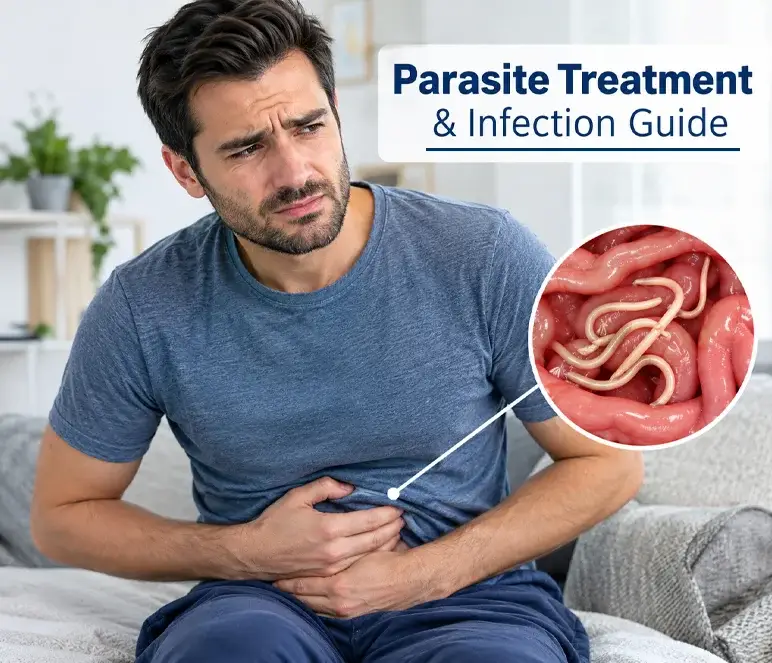
Parasitic infections occur when organisms that live on or inside another organism cause an infection. Depending on the parasite, infections can affect the gastrointestinal system, skin, blood, tissues, or other parts of the body.
Understanding the type of parasite is important because different infections require different diagnostic approaches and treatments. Parasite treatment may involve prescription antiparasitic medications, supportive care, hygiene measures, or other approaches depending on the infection.
This guide explains the types of parasitic infections, symptoms of parasitic infections, antiparasitic medications, treatment options, prevention, and when to seek medical care.
For additional treatment resources, explore the A2Z RX Parasitic Worm Infections category.
Verified Telehealth
Board-Certified Care
Your Privacy Protected
Fast & Discreet Shipping

There are several major categories of parasitic infections.
Parasitic worms, also called helminths, include several groups of organisms that can infect humans.
Examples include:
Protozoa are microscopic, single-celled organisms.
Examples of protozoan infections include:
Ectoparasites live on the surface of the body rather than inside it.
Examples include:
Different antiparasitic medicines work in different ways.
Parasite energy production
Cellular or structural processes
Neuromuscular activity
Nutrient absorption
Reproduction or survival
Because parasites differ biologically, a medication effective against one parasite may have little or no activity against another. This is why identifying the organism is important before selecting treatment.
Antiparasitic medications are medicines used to treat certain parasitic infections. Different medicines work against different organisms. Some primarily target intestinal worms, while others are used for specific protozoal infections or other parasitic conditions.
Testing may be appropriate when symptoms, exposure history, travel, or other factors raise concern for a parasitic infection.
A healthcare professional may consider several factors when selecting treatment.
The organism causing the infection is one of the most important factors.
An intestinal infection may require a different approach from an infection affecting tissue, blood, or another organ.
More complicated infections may require additional evaluation or specialist care.
Age, pregnancy status, underlying conditions, allergies, and previous treatment can influence medication selection.
Potential interactions should be considered before starting antiparasitic therapy.
Some infections may require follow-up testing or additional treatment depending on the organism and response.

Complete a secure online medical intake form and screening.

A licensed provider reviews your information and determines eligibility.

Your medication is shipped in discreet packaging with free 2-day delivery.

Ongoing care and support available anytime.
Parasitic infections include worm infections, protozoan infections, and ectoparasitic infections. The specific organisms and symptoms vary considerably between infections.
Symptoms can include diarrhea, abdominal discomfort, nausea, vomiting, bloating, fatigue, itching, fever, and changes in appetite. Some infections may cause few or no symptoms.
Parasite infection treatment involves treating a confirmed or suspected parasitic infection with an appropriate medication or other medical approach based on the specific organism.
Antiparasitic medications are medicines designed to treat particular parasitic organisms. Examples include medicines used against certain intestinal worms or other susceptible parasites.
Yes. Mebendazole is an antiparasitic medicine used for certain intestinal worm infections. Its appropriate use depends on the specific infection.
Ivermectin is used for certain parasitic infections. However, it does not treat every type of parasite, so the specific infection matters when determining treatment.
No. Different parasites have different biological characteristics and susceptibility to medications. Treatment should therefore be matched to the identified or suspected organism.
Depending on the suspected infection, diagnosis may involve medical history, physical examination, stool tests, blood tests, imaging, or other laboratory testing.
Some parasitic infections can be reduced through hand hygiene, safe food and water practices, proper cooking, appropriate footwear, insect protection, and other exposure-specific precautions.
Persistent gastrointestinal symptoms, unexplained weight loss, prolonged fever, symptoms after travel, or known parasite exposure are reasons to consider professional medical evaluation.

👋 Hi! Need Help With a Prescription or Refill?
✖