Parasitic infections can affect the
digestive system, skin, and other parts of the body, depending on the type of
parasite involved. Because different parasites respond to different
medications, identifying the suspected infection is an important part of
choosing appropriate treatment.
Ivermectin and mebendazole are antiparasitic medications used in the management of certain
parasitic infections. However, they are not interchangeable, and the
appropriate medication depends on the parasite, diagnosis, patient
characteristics, and applicable prescribing information.
In the United States, oral ivermectin
tablets are FDA-approved for intestinal strongyloidiasis and onchocerciasis.
Mebendazole is used for certain intestinal worm infections, including pinworm,
whipworm, roundworm, and hookworm.
For patients researching parasite
infection treatment, understanding the differences between these
medications, how infections are diagnosed, and when prescription therapy may be
appropriate can support a more informed conversation with a healthcare
provider.
What Is Ivermectin?
Ivermectin is an antiparasitic medication
that acts against certain parasites. Its FDA-approved oral tablet indications
include:
- Intestinal strongyloidiasis caused by Strongyloides
stercoralis
- Onchocerciasis caused by Onchocerca volvulus
The appropriate dose and treatment schedule
depend on the condition being treated and the patient's circumstances. Official
prescribing information provides different dosing recommendations for
strongyloidiasis and onchocerciasis.
Ivermectin should therefore not be viewed
as a universal worm infection treatment. Other parasites may require
different medications.
What Is Mebendazole?
Mebendazole is another antiparasitic
medication used for certain intestinal worm infections.
It may be used in the treatment of
infections such as:
- Pinworm
- Whipworm
- Roundworm
- Hookworm
The appropriate medication and treatment
schedule depend on the specific infection and the patient's circumstances.
Mebendazole works differently from
ivermectin, which is one reason healthcare providers consider the suspected
parasite before selecting an intestinal worm medication.
Ivermectin vs. Mebendazole: What's the Difference?
Although both medications are antiparasitic therapies, they have different indications and should not automatically be substituted for one another.
| Factor | Ivermectin | Mebendazole |
| Medication type | Antiparasitic | Antiparasitic |
| FDA-approved oral ivermectin indications | Intestinal strongyloidiasis and onchocerciasis | Different approved uses depending on product and labeling |
| Examples of infections treated | Strongyloidiasis, onchocerciasis | Pinworm, whipworm, roundworm, hookworm |
| Treatment selection | Based on infection and patient factors | Based on infection and patient factors |
| Prescription decision | Healthcare provider | Healthcare provider |
The key point is that the name "antiparasitic" does not mean every medication in this category treats every parasite.
What Is an Ivermectin and Mebendazole
Combination?
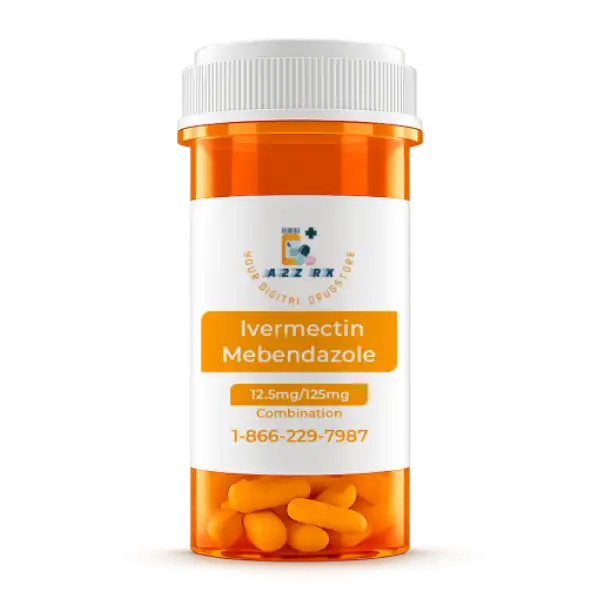
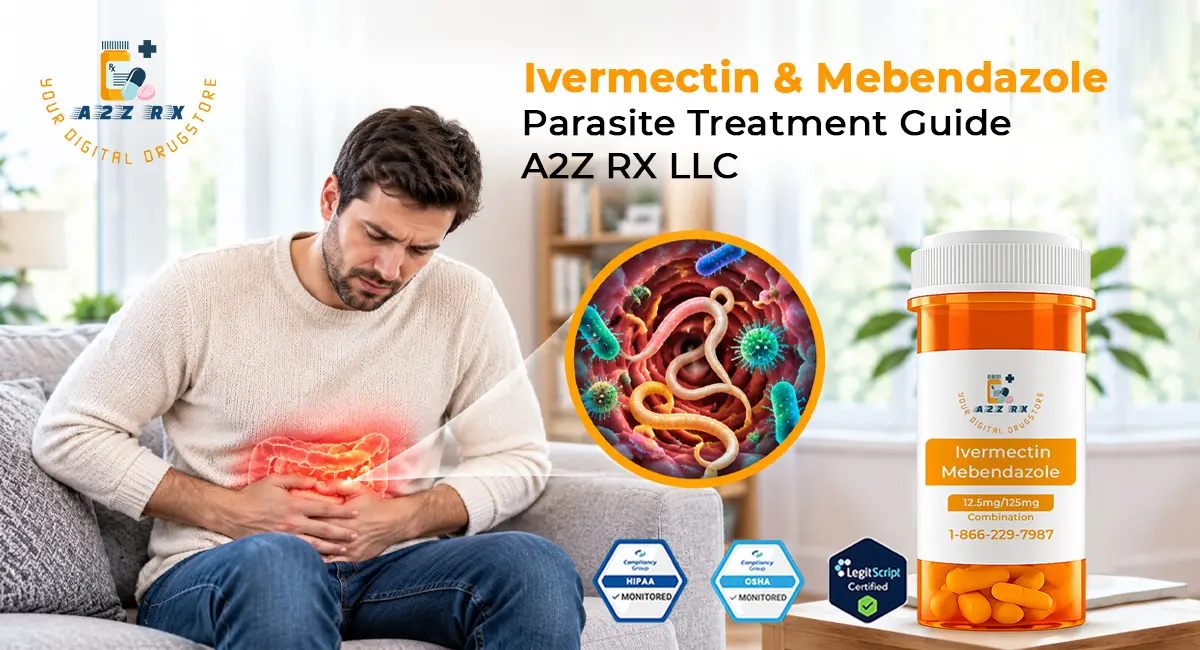
A2Z RX LLC offers an Ivermectin+Mebendazole
Combination as an available antiparasitic treatment option. The product
page describes a combination containing ivermectin and mebendazole and states
that provider consultation is available when appropriate.
Ivermectin
+ Mebendazole Combination at A2Z RX
Importantly, the availability of a
combination product does not mean that every patient with suspected parasites
should use both medications. A healthcare provider should determine whether the
combination is appropriate based on the suspected or confirmed infection,
medical history, medications, and other relevant factors.
This distinction is particularly important
when researching antiparasitic therapy online. Product availability and
FDA-approved indications are not necessarily the same thing.
When Might an Ivermectin and
Mebendazole Combination Be Considered?
The decision to use a combination should be
based on clinical evaluation rather than symptoms alone.
A healthcare provider may consider factors
such as:
- The suspected or confirmed parasite
- Laboratory test results
- Symptoms and their duration
- Previous parasite treatment
- Travel or geographic exposure
- Age and body weight
- Pregnancy or breastfeeding
- Current medications
- Allergies
- Existing medical conditions
- Potential drug interactions
A provider may determine that ivermectin
alone, mebendazole alone, another antiparasitic medication, or no antiparasitic
treatment is more appropriate.
Ivermectin Capsules from A2Z
RX
For patients researching prescription
ivermectin options, A2Z RX also offers Ivermectin Capsules.
The A2Z RX product information lists
ivermectin capsules in multiple strengths and describes them as an
antiparasitic treatment available with provider guidance.
Patients should not select an ivermectin
strength independently. The appropriate product, dose, and treatment duration
depend on the condition being treated and the prescribing provider's
assessment.
Official ivermectin labeling provides
condition-specific dosing information for strongyloidiasis and onchocerciasis.
Mebendazole Treatment Through
A2Z RX
A2Z RX also provides a Mebendazole
treatment option for patients seeking evaluation for certain intestinal worm
infections.
Mebendazole may be used for certain
intestinal worms, including pinworm, roundworm, whipworm, and hookworm. The
appropriate treatment depends on the infection and individual patient factors.
Patients should provide accurate
information about symptoms, medications, allergies, and medical history before
a prescription decision is made.
How Are Parasitic Infections
Diagnosed?
Diagnosis depends on the suspected
parasite.
Strongyloidiasis
Strongyloidiasis is caused by Strongyloides
stercoralis. Healthcare providers may use stool examination and blood
testing as part of the diagnostic process.
CDC identifies ivermectin as first-line
therapy for strongyloidiasis.
Follow-up evaluation may also be
appropriate in some patients to determine whether the infection has been
successfully cleared.
Pinworm
Pinworm commonly causes itching around the
anus, particularly at night. The CDC identifies the tape test as the most
common diagnostic method.
Testing is generally performed in the
morning before bathing or using the bathroom because eggs may be collected from
the skin around the anus.
Other Worm Infections
Other intestinal worms may require stool
testing or another diagnostic approach. Because symptoms can overlap between
different infections, treatment should not be selected solely from a symptom
checklist.
When Is Parasite Treatment
Appropriate?
Treatment may be appropriate when a
healthcare provider determines that a parasitic infection is present or
sufficiently likely based on clinical information and, when appropriate,
testing.
A provider may assess:
- What parasite is suspected?
- Are symptoms consistent with the suspected infection?
- Is laboratory testing necessary?
- Which medication is appropriate?
- Are there health conditions or medications that affect treatment?
- Does the patient need follow-up after treatment?
This approach helps avoid using an
inappropriate intestinal worm medication for an infection it is not
designed to treat.
Why You Should Not Choose an Antiparasitic Medication
Based Only on Symptoms
Abdominal discomfort, diarrhea, itching,
fatigue, or changes in bowel habits can have many possible causes.
Having one of these symptoms does not
automatically mean that a person has a parasitic infection.
Similarly, having a history of a previous
worm infection does not necessarily mean that a new episode should be treated
with the same medication.
Clinical evaluation can help determine
whether testing is necessary and whether prescription treatment is appropriate.
Important Safety Considerations with Ivermectin
Patients prescribed ivermectin should
follow the instructions provided by their healthcare professional.
Particular considerations can include:
- Other medications being taken
- Existing medical conditions
- Pregnancy or breastfeeding
- Age and body weight
- Possible parasitic co-infections
- Previous medication reactions
For patients being evaluated for
onchocerciasis, Loa loa infection is an important consideration because
serious reactions can occur in people with certain levels of Loa loa
infection.
The FDA also warns against using ivermectin
products formulated for animals. Animal formulations are different from human
medications and may not be safe for people.
Ivermectin and COVID-19: What Patients Should Know
Ivermectin's FDA-approved oral tablet
indications include intestinal strongyloidiasis and onchocerciasis—not
COVID-19.
The FDA states that currently available
clinical trial data do not demonstrate that ivermectin is effective against
COVID-19 in humans.
Therefore, information about ivermectin's
approved antiparasitic uses should not be confused with claims about unapproved
uses.
How A2Z RX Online Evaluation Works
A2Z RX LLC provides an online pathway for
patients seeking evaluation for available prescription treatments.
1. Review Treatment Information
Patients can review available options such
as ivermectin, mebendazole, and the Ivermectin+Mebendazole Combination.
2. Complete the Health Intake
Patients provide information about their
symptoms, health history, current medications, allergies, and other relevant
factors.
3. Licensed Provider Review
A licensed healthcare provider reviews the
submitted information to determine whether the requested treatment may be
medically appropriate.
4. Prescription Decision
A prescription is not automatic. The
provider determines whether treatment is appropriate based on the information
available.
A2Z RX states that prescriptions are issued
only after clinical evaluation.
5. Pharmacy Fulfillment
When treatment is prescribed, the
prescription can proceed through the applicable pharmacy fulfillment process.
Choosing Between Ivermectin,
Mebendazole, and Combination Therapy
There is no single antiparasitic medication
that is appropriate for every patient.
A provider may recommend:
- Ivermectin when an appropriate
indication is identified
- Mebendazole for certain intestinal
worm infections
- Ivermectin + Mebendazole combination when the provider determines that the combination is
appropriate
- Another treatment when the suspected parasite requires a
different approach
The goal of evaluation is not simply to
select a medication. It is to identify the likely infection and choose
treatment that fits the patient's circumstances.
Frequently Asked Questions About Ivermectin and
Mebendazole
What is ivermectin used for?
FDA-approved oral ivermectin tablets are
indicated for intestinal strongyloidiasis and onchocerciasis.
What is mebendazole used for?
Mebendazole is used to treat certain
intestinal worm infections, including pinworm, whipworm, roundworm, and
hookworm.
Is ivermectin the same as mebendazole?
No. They are different antiparasitic
medications with different indications and treatment considerations.
What is the Ivermectin+Mebendazole
Combination?
It is an A2Z RX product combining
ivermectin and mebendazole in one treatment option. Whether the combination is
appropriate depends on a healthcare provider's evaluation.
Can I buy Ivermectin and Mebendazole
together?
A2Z RX lists an Ivermectin+Mebendazole
Combination for patients seeking an online prescription evaluation. Treatment
is subject to clinical review and is not automatically prescribed.
Does ivermectin treat every type of
worm?
No. FDA-approved oral ivermectin
indications include strongyloidiasis and onchocerciasis. Other worm infections
may require different medications.
How is a parasitic infection diagnosed?
Diagnosis depends on the suspected parasite
and may involve stool testing, blood testing, or other appropriate diagnostic
methods.
Can I choose my own antiparasitic
medication?
Patients should not independently select
prescription antiparasitic treatment. A healthcare provider should determine
whether treatment is appropriate and which medication best fits the suspected
infection.
Is combination therapy appropriate for
everyone?
No. Combining medications is not
automatically appropriate for every parasitic infection. The decision should be
made by a healthcare provider after considering the patient's diagnosis and
individual factors.
Where can I learn about antiparasitic
treatment online?
Patients can review available options through
A2Z RX and complete an online health intake for provider evaluation when
appropriate.
Explore Parasite Infection Treatment Options Through
A2Z RX LLC
A2Z RX LLC
provides online access to several antiparasitic treatment options, including
ivermectin capsules, mebendazole, and an Ivermectin+Mebendazole Combination.
The company's website states that licensed medical providers review
consultations to determine whether a prescription is medically appropriate.
Patients can explore the available options:
Ivermectin
+ Mebendazole Combination
The appropriate parasite infection
treatment depends on the suspected or confirmed infection and the patient's
individual circumstances. An online evaluation should therefore be considered a
clinical assessment process rather than an automatic medication-selection
process.
About This Article
Written by:
A2Z RX Editorial Team
Last updated: September 24, 2026
This article is intended for general
educational purposes and does not replace individualized medical advice,
diagnosis, or treatment. Prescription treatment should be determined by an
appropriately licensed healthcare provider based on the patient's individual
circumstances.
References
- U.S. Food and Drug Administration — Ivermectin and COVID-19
FDA information on approved human uses of ivermectin and important safety considerations. - DailyMed — Ivermectin Tablets
Official prescribing information covering indications and dosage for strongyloidiasis and onchocerciasis. - Centers for Disease Control and Prevention — Clinical Care of
Strongyloides
Clinical information regarding diagnosis and treatment of strongyloidiasis. - A2Z RX LLC — Ivermectin + Mebendazole Combination
Product information for the combination treatment option.