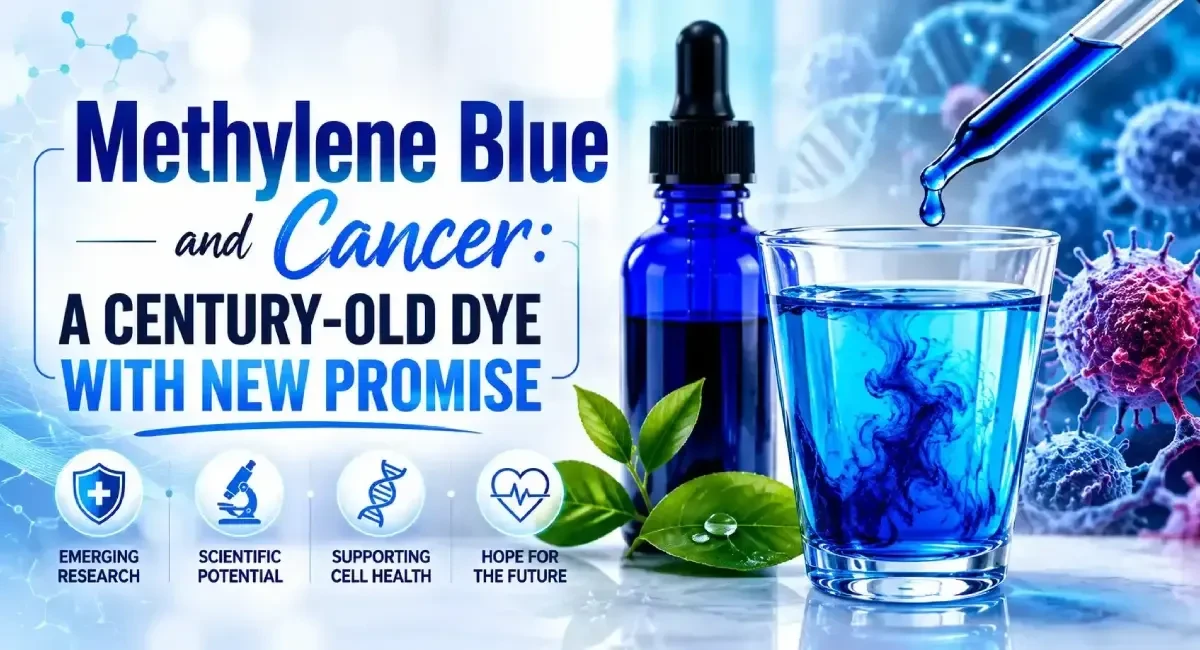
Methylene Blue has been used in medicine for more than 100 years, primarily as a diagnostic dye and for treating certain medical conditions such as methemoglobinemia. In recent years, researchers have begun exploring whether this well-known compound may have additional applications—including a possible role in cancer research.
Although early laboratory findings are encouraging, methylene blue is not an approved treatment for cancer, and more clinical research is needed to determine its safety and effectiveness in oncology.
What Is Methylene Blue?
Methylene Blue is a synthetic compound first developed in the late 19th century. Today, it has several established medical uses, including:
- Treatment of methemoglobinemia
- Surgical and diagnostic staining
- Laboratory research
- Certain antimicrobial applications
Because its safety profile is well understood for approved indications, scientists are investigating whether it may also have therapeutic potential in other areas of medicine.
Why Are Researchers Interested in Cancer?
Cancer cells often rely on altered energy production and oxidative stress pathways to survive and multiply.
Researchers are studying methylene blue because laboratory experiments suggest it may:
- Influence mitochondrial function
- Affect cancer cell metabolism
- Increase oxidative stress within tumor cells
- Support photodynamic therapy when activated by specific wavelengths of light
- Potentially improve the effectiveness of certain conventional cancer treatments
These mechanisms are still being investigated, and most evidence comes from laboratory and animal studies rather than large human clinical trials.
Emerging Areas of Research
Scientists continue to explore methylene blue in several promising areas:
1. Mitochondrial Function
Methylene blue may help regulate mitochondrial energy production. Since many cancer cells have abnormal mitochondrial activity, researchers are investigating whether modifying these pathways could influence tumor growth.
2. Photodynamic Therapy
One of the most studied applications involves photodynamic therapy (PDT).
In PDT, methylene blue can act as a photosensitizer. When exposed to specific wavelengths of light, it produces reactive oxygen species that may damage nearby cancer cells while minimizing effects on surrounding healthy tissue.
This approach remains under investigation for selected cancer types.
3. Oxidative Stress
Cancer cells often maintain a delicate balance between oxidative damage and survival.
Researchers are examining whether methylene blue can disrupt this balance, making cancer cells more vulnerable to treatment.
4. Combination Therapy
Rather than replacing chemotherapy or radiation, methylene blue is being investigated as a possible companion therapy that could enhance the effectiveness of established cancer treatments.
Current Evidence
Research into methylene blue and cancer is still in its early stages.
Current evidence includes:
- Laboratory (cell culture) studies
- Animal research
- Small pilot studies
- Ongoing clinical investigations
At this time, there is insufficient evidence to conclude that methylene blue is an effective treatment for cancer in humans.
Large, randomized clinical trials are required before any recommendations can be made.
Potential Advantages Being Studied
Researchers are interested in methylene blue because it:
- Has been used in medicine for decades
- Is relatively inexpensive
- Has well-documented pharmacology for approved uses
- May target cellular energy pathways
- Could complement existing cancer therapies
These potential advantages remain investigational and should not be interpreted as established clinical benefits.
Safety Considerations
Although methylene blue is approved for certain medical conditions, it is not risk-free.
Possible concerns include:
- Interactions with antidepressants (SSRIs, SNRIs, MAO inhibitors), which can increase the risk of serotonin syndrome
- Use in individuals with G6PD deficiency, where it may cause hemolytic anemia
- Temporary blue or green discoloration of urine and body fluids
- Nausea, headache, dizziness, or increased blood pressure in some patients
Methylene blue should only be used under the supervision of a qualified healthcare professional.
The Future of Research
Interest in drug repurposing continues to grow as researchers search for affordable therapies with known safety profiles.
Methylene blue represents one of several older medications being investigated for potential new applications in oncology. Future clinical trials will help determine whether the promising laboratory findings translate into meaningful benefits for cancer patients.
Final Thoughts
Methylene blue has served medicine for more than a century, and modern research is uncovering intriguing possibilities for its future use. While early laboratory and preclinical studies suggest potential anticancer mechanisms, there is currently no conclusive clinical evidence that methylene blue is a proven treatment for cancer.
Patients should not use methylene blue as a substitute for standard cancer therapies and should always discuss treatment options with their oncology team.
As research continues, methylene blue remains an important example of how established medicines may one day find new roles in improving patient care.
Medical Disclaimer: This article is for educational and informational purposes only. Methylene blue is not approved as a treatment for cancer. The information presented should not be interpreted as medical advice or a recommendation to use methylene blue for cancer treatment. Always consult a qualified healthcare professional regarding diagnosis and treatment options.